11 Apr Your Guide To Natural Sweeteners!
Natural sweeteners provide us the opportunity to sweeten our food in a more natural, healthy way than the sugar options found in most processed foods. While this approach will benefit our body a bit more than regular old sugar, we must remember that they are all still sweeteners and all sweeteners should be used in moderation in order to reach optimal health.
Here are a few of my favorites:
Agave Nectar: This is a natural liquid sweetener made from the juice of the agave cactus. It is 1.4 times sweeter than refined sugar but has been found to have a lower GI (Glucose Index) score which means less disruption to the body’s blood sugar levels.
Note of caution for Agave Nectar: This sweetener contains high amounts of fructose (even higher than high-fructose corn syrup) and some research suggest that fructose doesn’t allow our appetite hormones to shut off, which means that you may end up overeating and decrease your glucose tolerance. As with any sweetener, you’ll want to use agave nectar in moderation.
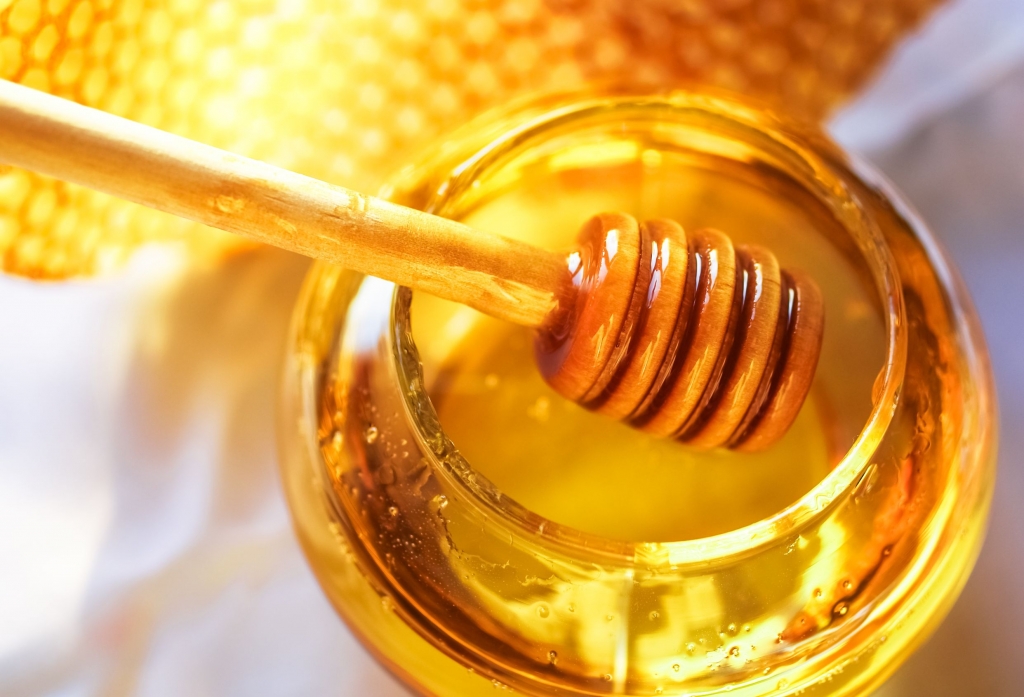
Honey: Honey is one of the oldest sweeteners around and is sweeter than table sugar. It can have a range of flavors from dark and strongly flavored, to light and mildly flavored. Raw honey contains small amounts of enzymes, minerals and vitamins and has anti-viral, anti-bacterial and anti-fungal properties. It’s also known as a powerful antioxidant, strengthens the immune system and helps to eliminate allergies when purchased locally in its raw form.
Note of caution for Honey: If you have a true sugar addiction and are trying to rid your body of the sugar, you may opt to stay away from honey for a while, as your body tends to respond to honey just as it does sugar. As with all sweeteners, whether you experience sugar addiction or not, honey should be used in moderation.
One of my common medicinal uses for raw honey is to treat skin burns…I’ve accidentally touched a few hot pot handles in my day! Place raw honey on a Band-Aid and place directly to the burn. The stinging will subside and your skin will heal up nicely!
Maple Syrup: Maple syrup is made from boiled-down maple tree sap and contains many minerals. Be sure you’re purchasing 100% maple syrup and not a maple-flavored corn syrup like Log Cabin or Mrs. Butterworth!
Maple syrup is a nice sweetener for baking and cooking. You may use it to remove the bitter taste from your tomato sauce, add it to your soup to balance out flavor, or use it when baking muffins. It’s very versatile and a little goes a long way.
Stevia: While the taste of stevia is not a favorite of mine, I often get asked about it. South Americans have used this leafy herb for centuries. It is 100 to 300 times sweeter than white sugar and can be used in cooking and baking. You may find it used in canned/bottled beverages as well. Stevia is a zero calorie food and does not affect blood sugar levels. If you choose to use this sweetener, select the green or brown liquid or powders because the white and clear versions are highly refined.
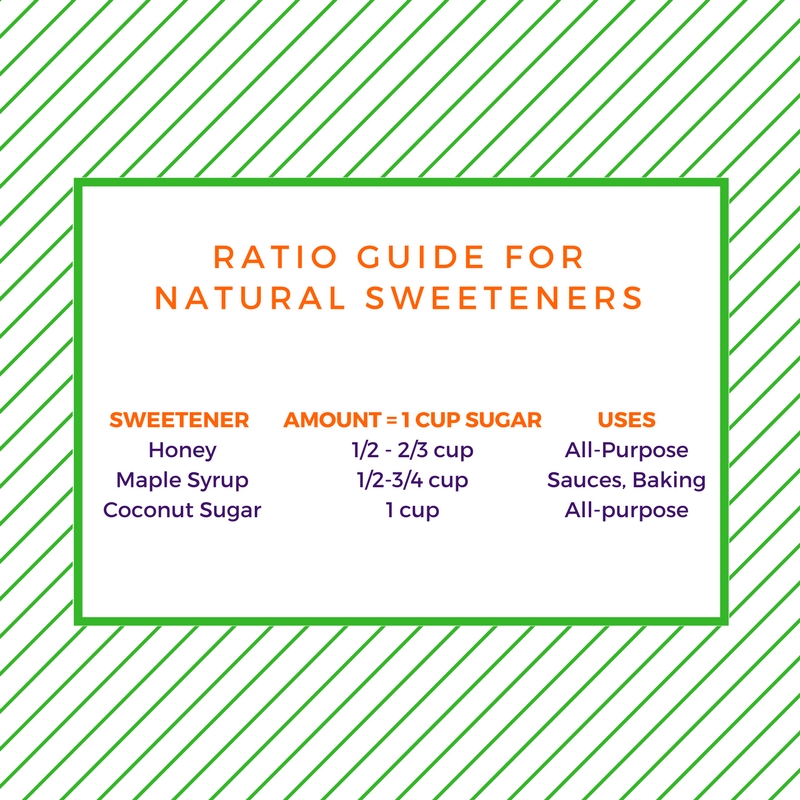
Coconut Palm Sugar: Not to be confused with “palm sugar”. They are two different sweeteners.Coconut palm sugar is low on the glycemic index and higher in nutrients than regular table sugar (which is void of any nutrients). It tastes great and can be used where you use regular sugar for baking and sweetening food in a convenient one-to-one ratio.
The biggest health tip I can provide you around any sweetener is to use all of them in MODERATION. Ideally, you’ll get your daily sweets intake through fresh, organic whole foods. When you consume any added sweetener in excess, it can cause a lot of problems like metabolic syndrome, obesity, diabetes and cardiovascular disease. So do your body good and reserve the use of these sweeteners for special treats and occasions.